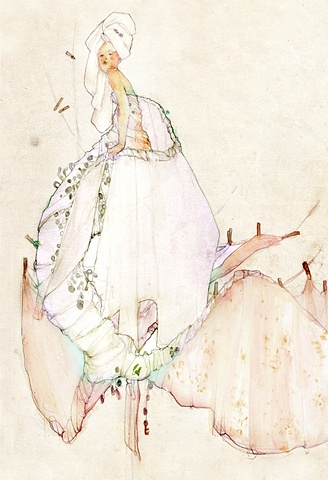
Cait O'Connor
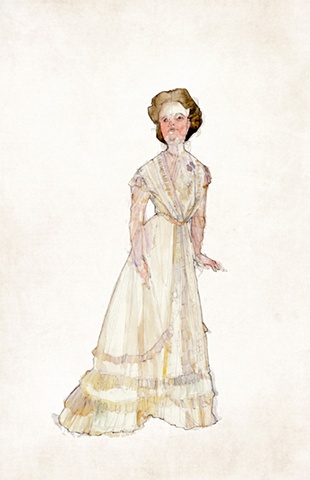
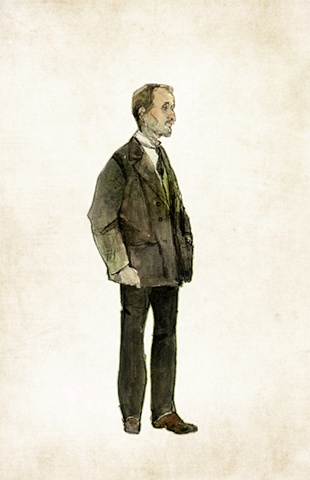
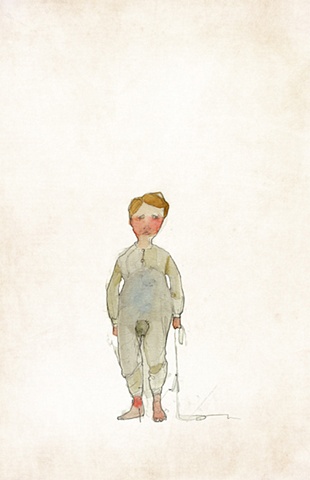
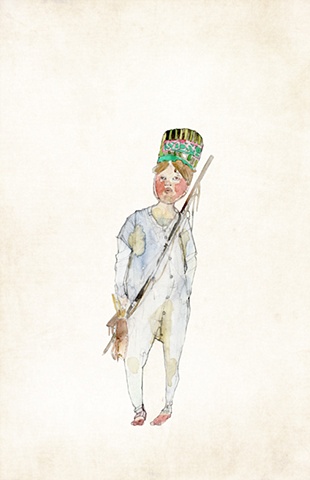
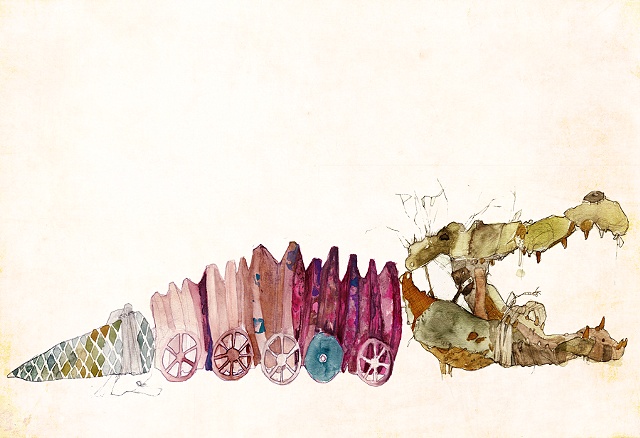
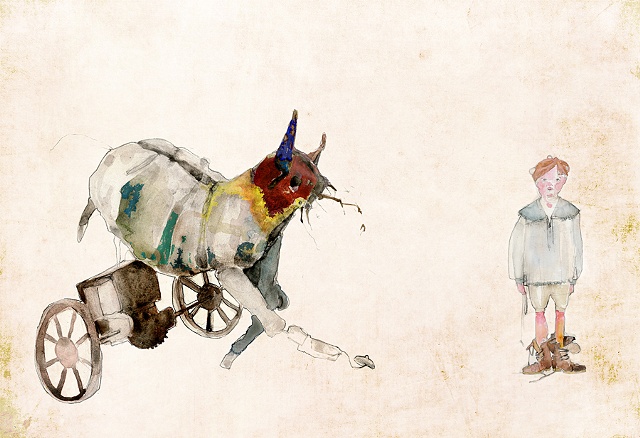
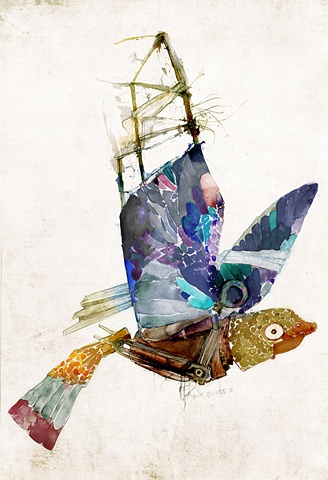
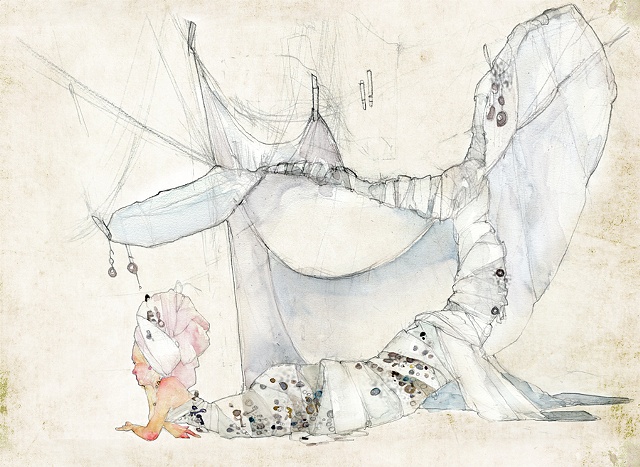
Mrs. Darling Mr. Darling Michael Darling Tootles Nana Nana Schematic Wendy Darling Peter Pan Captain Hook Cecco Indian Panther Crocodile Wolf Never Bird Mermaid Mermaid
Peter Pan by J.M. Barrie
I remember being a child. I remember a subway ride being an unpredictable journey. The magic of navigating through a mass of underground tunnels was not lost on me. I never took it for granted that I would reach home. I always ran the risk of ending up in a forest, or a junkyard or a place so new to me that it only existed as a nagging, intangible excitement in my mind. Everywhere the world stood neglected, waiting for me to play with it, to draw out its personality, to wake it up.

To me, the immediacy of imagination is the very engine of Peter Pan.
We are transported to a world which does not achieve a specific reality, rather, it allows different realities to mingle and blend. Everyday objects have transformative powers and environments change as quickly as we imagine them to. Whimsy and terror share the same spaces and a make-believe feast, eaten from empty bowls with imaginary spoons, can be interrupted by the brutal slaughtering of an entire tribe of Indians. Neverland constantly oscillates between what is known, what is supposed, what is made up and what is dreamed of. This is a world of childhood imagination.

I believe this piece should awaken nostalgia in us - a memory of something magical just out of our reach. We should remember the power of being a child.

Peter Pan or The Boy who Would not Grow Up grew out of a relationship between Barrie and the children of the Llewelyn Davies family with whom he shared his life. Barrie wrote this piece, I believe, in an attempt to capture and suspend the imaginary adventures he shared with these children. Just as Wendy is on the brink of adolescence, so too were Barrie’s companions at the time this play was written. This piece is both a celebration of reckless imagination and farewell to the intimacy of wonderment he shared with the Davies boys. Barrie writes:

One by one as you swung monkey-wise from branch to branch in the wood of make-believe
you reached the tree of knowledge. Sometimes you swung back into the wood, as the unthinking
may at a cross-road take a familiar path that no longer leads to home; or you perched ostentatiously
on its boughs to please me, pretending that you still belonged; soon you knew it only as a vanished
wood, for it vanishes if one needs to look for it
(J.M. Barrie, To the Five: A Dedication)


Barrie whimsically claims that he himself did not write Peter Pan; rather it is the Davies children who are the real authors. I have used this idea of a world invented by children to create an environment where imagination is the catalyst for adventure.

Overview of the Production

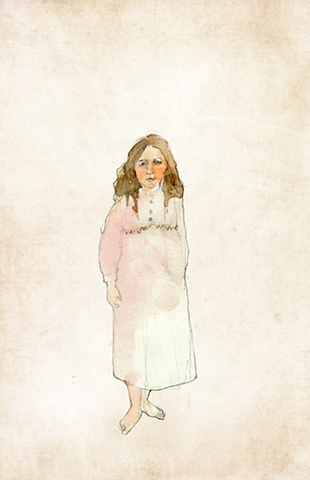
We open on the nursery where Mr. and Mrs. Darling are putting their children to bed; this is a real nursery in Edwardian London.
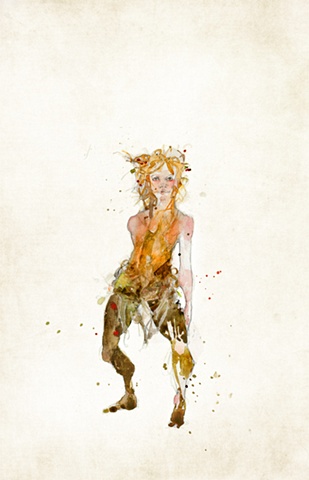
The nightlights flicker out and Peter climbs in through the nursery window. He looks as though he has spent ages running through the forest collecting mud and dirt and entangling himself in brambles and berries and sap. He is wild and strange and magical; he is the very manifestation of childhood.

Peter shows Wendy and her brothers how to ‘fly’ by easily running up a wall. However, they must fly by jumping from bed to bed - content to play at flying. In this way we set up a language of contrasting strains of magic which continues throughout the production allowing the simplicity of childhood play to escalate to the heights of fantasy.

Peter’s very presence activates Neverland and we see it grow around us.
Neverland is the nursery bewitched and its inhabitants are born of the house - they are made of the things we take for granted. They have been waiting to be woken up.

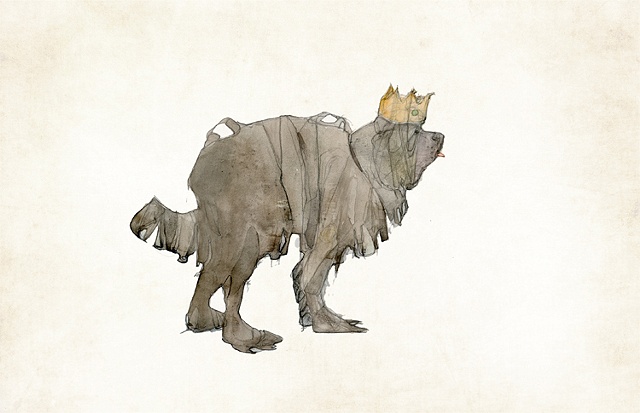
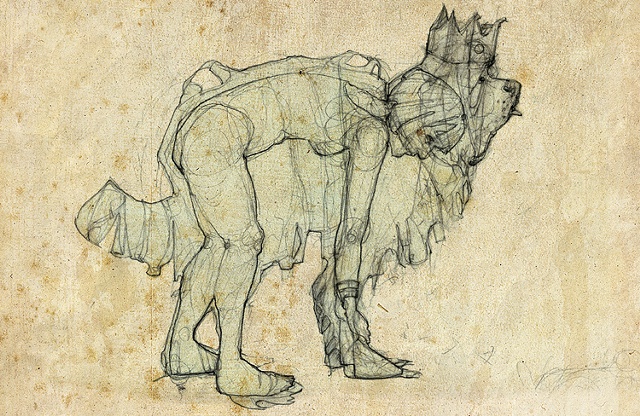
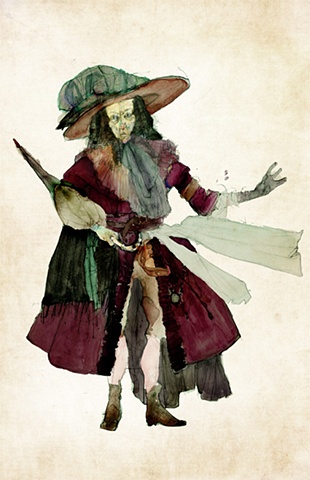
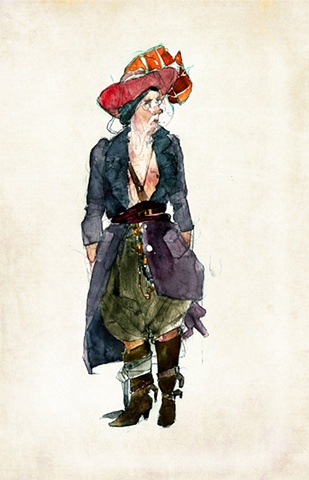
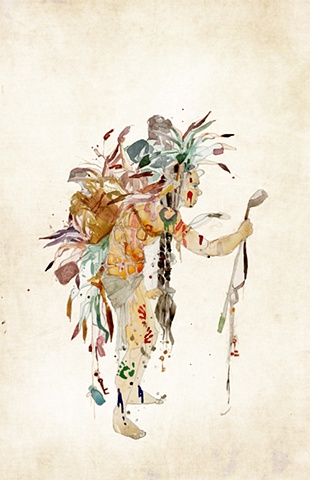
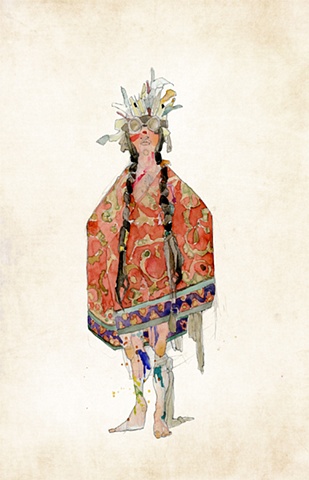
From the familiar springs the fantastic as a crowd of snarling pirates pours out of a small wardrobe. They are dressed in the contents of a typical turn of the century closest, which are arranged to evoke the pirates of familiar fables and illustrations. They vacillate between humorous and frightening as we acknowledge that Captain Hook is wearing a woman’s cloak and petticoat and then watch him gut a man with the handle of his umbrella. A tribe of Indians sneaks down from the attic. They are covered in house paint and have created elaborate headdresses and ceremonial costumes from the mundane junk we store away. The beasts and birds of Neverland spring to life from the toy box as larger-than-life manifestations of the old broken toys we have seen Mr. Darling tripping over in the previous scene. Mermaids emerge from under the beds entangled in sheets which are hoisted like sails to become huge, billowing tails.

As we move through the story, the environment evolves and responds to the action - becoming larger and more elaborate as we become more immersed. Everything in this world can grow or be built from ingredients around the house. One thing engages the next and different sorts of magic commingle: when we build a chimney out of a top hat real smoke begins to pour out, when we splash in the waves made from bed sheets, we hear the sound of water being hit by hands. Every event drags more objects from around the house into the nursery, until at last, a huge pirate ship, made of ladders and twine and chairs, crashes onto the scene. The nursery is completely transformed.

As the lights come up we find ourselves at once back in the nursery as it first was. Here a happy scene unfolds as Mr. and Mrs. Darling rejoice over the return of their children and welcome home all others who are willing to grow up.

Peter is seemingly unmoved by the joyous homecoming and we see that his memory of our adventure together is already beginning to fade. As he leaves the scene we understand that a certain amount of magic goes with him. We know too that as the children grow older they will find it harder and harder to return to Neverland. Soon they will know it only as a vanished wood.
BACK TO COSTUME DESIGN